Posts

Image
Andy’s Story. Embodied Practice in the Pottery Workshop Bobs Village Gallery in Wisdom, North Carolingan   is a production pottery. It is a small factory making craft pottery by hand. A craft industry, in this case it is run by Bob and his wife Molly. Ellen Dean and a few other employees take care of the duties in the gallery and the pottery workshop. Bob and Ellen work together six days a week, eight hours a day. That is the kind of dedication a craft practice takes. He had a pottery wheel, a Shimpo and sits in the workshop window throwing pots. It is a practice, a labour and it is really hard, dirty, cramp-inducing work. Ellen puts handles on, fires up the bisque kiln, loads the glaze kiln, tends the gas kiln, glazes pots for orders and helps in the gallery packing pots to ship out to galleries. See post https://talkingaboutartmphil.blogspot.co.uk/2018/02/the-story-of-handle-man-why-practice.html for other stories about embodied practice. This summer they have an appre...
Image
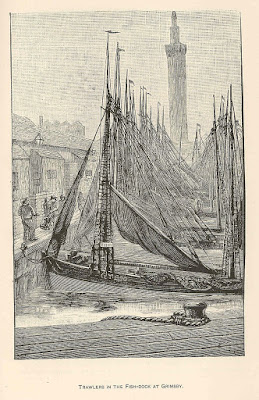
From Fishtown to Gimmerton, Education as a Social Mobility or The Tale of Boreas, a case study. Boreas is a young man, sensitive, quietly spoken and shy. One of our Non-Traditional students from a white working class broken home in coastal Fishtown, a depressed post-industrial area of the Northern coast line. There is high unemployment and few opportunities in Fishtown and so after an uneventful and unheroic schooling with few aspirations Boreas moved to Gimmerton. He is a softly spoken gentle soul that life ‘happens to’ rather than having any agency of his own, or that was the case at the beginning of the Access course. Boreas’ issues run deep, abandoned by his Dad, left in the care of a step parent, he drifted and turned to drink and recreational drugs. The cat’s eye glimmer in the road to change was community education and night classes in Gimmerton. Being in a new town away from detrimental influences he was able to switch paths. Without inspiration and encourageme...
Image
Telling tales part 2.  Narrative Lives and Banned Stories Themes in this post are, Narrative, stories, banned stories, the Magnificat, Rebel Irish songs, the Arab spring, so called ‘degenerate’ artists, Etty Hillesum diarist in hiding and Marshall Gregory’s ethical critique of narrative. Stories are an integral part of our lives, from fairy tales to ancient Greek mythology and more localised folk tales, (Norton 1998, The Beast Within, comparing Celtic and Papua new Guinea mythologies.) In addition to stories we are told as children there are the stories we see on TV such as soap operas, also gaining popularity Netflix, the internet, social media and even adverts are mini stories, miniature narratives. Gregory (2009) relates that in opposition to the story makers there are the story-deniers like the Puritans of the 16 th and 17 th centuries. Some narratives were banned because they were deemed too subversive. For instance the Magnificat (Lk 1:46-55), Rich Lusk (...
Image
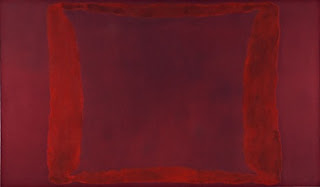
Inside the Red Cube: Rothko’s Seagram Paintings, a case study of obsessive practice. Response to The artist studio exhibition, Tate Modern 2018. (Visited 220318). This post considers: Practice through historical research - The role of contextualising practice in the Laurentian Library and Rothko’s Seagram Mural Project, practice through performance   - the staging of the ‘room’ with scaffolding to get the space right, practice through communication - link with White Cube Thinking article, How to Exhibit Practice? The Narrative continues, new stories about the paintings. Continuing from the post ‘ White Cube Thinking ’ , Rothko in his Seagram commission, was absorbed by and wanted to express the feeling of being in (time, space, memory, time-based, Decartian body in space, in the Ingold taskscape of the library) Michelangelo’s Laurentian Library (1525) – a Medici quattrocento building next to il Duomo in Florence. This library was purpose built for study, acad...
Image
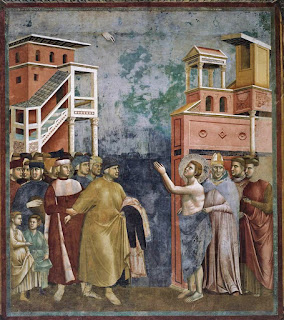
Narrative Art:  T elling Tales About Art Practice;  part 1 Narrative Art; Pre- Modern A narrative is simply a story (Tate, 2018a) and narrative art practice produces art and design work that tells a story. Much of Western art until the twentieth century has been narrative, depicting stories from religion, myth and legend, history and literature. Audiences were assumed to be familiar with the stories in question. A good example of this is the life of St Francis depicted in the Basilica San Francisco, Assisi by Giotto 1300. Prior to the advent of literacy most narrative art was done in a simultaneous narrative style with very little overarching organisation. Once literacy developed in different parts of the world pictures began to be organised along register lines, like lines on a page that helped define the direction of the narrative. Modern Narrative art The Modern era in art is generally taken to begin around 1860 to 1960. Beginning with Manet’s Ol...
Image
White Cube Thinking : How to Contextualize and Present Practice? Response to Tobias Green (2017) The Witworth. Brian O’Doherty in his book, Inside the White Cube The Ideology of the Gallery Space (2000) frames the term White Cube as a metaphor for the modern gallery. The Whitworth with its recent renovations (2014 by MUMA architects) with influences from Frank Lloyd Wright’s Fallingwater 1964, the new build spans glass rectangular projections into the natural environment, connected to gallery spaces, lofty and multileveled, the traditional white cube. The Gardens so beautiful even now in the dead of winter, sharp cold sunlight, everything has died back and it is such a life struggle to make new green shoots, new beginnings, new connections and leave the old dead past behind. But it’s not completely behind, it’s the structure of the future, it is the pylon and armature of what is to be created. Black stumps of WW1 trees, poked, black, mouldered and wet out of the mu...