Posts

Image
Positive feelings about writing?   It seems to me it is critical thinking and writing together that go to make up good thoughtful writing. The thing about writing is that there are many reasons for writing. In my art school education we were taught how to write a biography for art shows and application forms for funding bids. How to think about a project we wanted to make and write a proposal for it. The writing had a practical purpose and described practical actions.   I found abstract theoretical writing harder. At A level, I was very motivated by my studies in theology. Our problem was in the 1980s no internet to look stuff up and no contemporary journals to help our essays. No contemporary writing on theology in the reference library we used to frequent and the dusty old books there written over a thousand years ago some of them. Jerome and Peake. Phew. Now when I think about research I begin with the internet and quickly deep dive into the academic library catalog...
Image
Common elements in my negative feelings about writing Oh wow its not often I can go on a moan fest, let it rip, and let it all out. Negative feelings about writing. Doubt – I’m not good enough to do this, I’m not expert enough in the field of academic writing. I had the wrong training in art and design with a bit of academia tacked on the end so I fee unprepared. This critical incident vignette demonstrates the beginning of negativity towards writing. Sitting on the scratchy coconut matting in primary school, in our class we had glass jars of things to count, beads, dog biscuits, ect. Of course, I ate a dog biscuit, it was really dusty and stale. I had decided to be silent that year. In class 4, making me about 7. I had decided that grown-ups were stupid. They asked ridiculous question that I couldn’t answer like “why can’t you tell the time” or “have you got a smile for us love?” “what’s going on in that head of yours?” I decided the best policy was elective mutism. That way I could...
Image
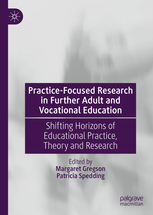
 So excited to see my chapter in print this summer. Publishing work is a long and archaic process, it feels medieval in its venerable qualities.  https://www.amazon.co.uk/Practice-Focused-Research-Further-Vocational-Education/dp/3030389936/ref=sr_1_1?dchild=1&keywords=practice+focused+research&qid=1599745167&s=books&sr=1-1  Chapter 7 :   Developing Critical Thinking and Professional Identity in the Arts Through Story.  By Frances Norton. Extract from Chapter 7 Brown (1998, p. 189) states that the idea of educating students in an atmosphere of equality and joint inquiry could maximise each student’s access to the legacy of the critical traditions might at first appear to be a high risk strategy. He goes further describing critical thinking interventions in education as an invitation to classroom disorder. Positive, creative, fruitful disorder is what I was hoping for when I embarked on this research journey. Close reading of the ideas of Lipm...
Image
  Belcher, W. L. (2019) Writing Your Journal Article in Twelve Weeks, Second Edition: A Guide to Academic Publishing Success (Chicago Guides to Writing, Editing, and Publishing), Chicago and London: Chicago University Press. I have just begun reading and thinking about this book. I love a workbook , it has tasks :)  Task 1. What feelings come up when you contemplate writing? Shame, exuberance, brightness, creativity, restriction. Mixed bag really. Shame from failing for so many years at school with writing because of dyslexia. Not really understanding my degree dissertation at Staffordshire Polytechnic, kind of floating through it as if I was in a trance. I think I literally put myself in a trance to avoid the sheer terror of the whole thing, or a perceived terror. Yet the European History module I took during my undergraduate studies I adored. Essays on Fascist Italy and Post-Communist Catholicism in Bella Ruse and Estonia were a dream.  In my BA dissertation, whe...
Image
Outsider/insider This is a term used by Hanrahan (1998, p.316) states, “the insider-outsider problem is only a problem in a positivistic system.   In a world where difference is allowed and dialogue replaces domination or consensus, inclusion or exclusion become less relevant terms”. Hanrahan is talking about power dynamics in the classroom. Durrant (2015) hopes to deconstructs the traditional power dynamics and instead calls his project volunteers ‘co-participants’ and counts himself as a co-participant in the research process. Coghlan and Brannick (2014) in, Insider Action Research talks about the Insider/outsider phenomenon and how it is often discussed by researcher practitioners in regards to Action Research. There are pitfalls associated insider/outsider, Noffke & Somekh (2013) state that when the researcher is an insider in an organisation, power relations and differentials may complicate the conduct. Researchers might be pressured or coerced to alter th...
Image
Low Literacy Levels The UK as a member of the Organisation for Economic Co-operation and Development (OECD) in this context is described as a high income economy with a high human development index (HDI). Despite this the UK has low literacy pockets. Surprisingly the Literacy Trust (2017) tells us low literacy levels are not only restricted to regions with low income, employment and social deprivation. L iteracy problems are widespread and embedded in the social fabric of our country. Experian undertook a literacy survey in England (excluding the devolved nations) in 2017 and found that 86% of English constituencies have at least one ward with urgent literacy need. Further, areas most in in need of literacy solutions according to the survey are Middlesbrough, Barking, Hackney South and Shoreditch, Liverpool and Sheffield. These are cities, towns or districts surrounding urban areas. UNESCO (2019) views acquiring and improving literacy skills throughout life, or Life Long Learn...
Image
Charles University, Prague https://sites2.ff.cuni.cz/esrea2019/ Haptic Criticality: Can Risk be Deflected Through Development of Critical Thinking with Adult Learners? paper by Frances Norton.   Abstract The objective is to develop adult student critical thinking (CT) skills to equip participants to be flexible in a world risk society. The first aim of this paper is to create channels of communication and connection. The second aim examines the meta-narrative of pedagogic policy in relation to adult learners in the petite-narrative (Lyotard 2004) of my classroom, creating a piece of action research (McNiff 2014) . The significance to the field of policy studies in adult education is that, haptic criticality, thinking through doing is essential to equip vocational students for problem solving in industry or self-employment. Relevant policies are:- the Foresight Review into the Future of Skills and Lifelong Learning (2016) and the Department of Education (DfE...