Posts

Image
Outsider/insider This is a term used by Hanrahan (1998, p.316) states, “the insider-outsider problem is only a problem in a positivistic system.   In a world where difference is allowed and dialogue replaces domination or consensus, inclusion or exclusion become less relevant terms”. Hanrahan is talking about power dynamics in the classroom. Durrant (2015) hopes to deconstructs the traditional power dynamics and instead calls his project volunteers ‘co-participants’ and counts himself as a co-participant in the research process. Coghlan and Brannick (2014) in, Insider Action Research talks about the Insider/outsider phenomenon and how it is often discussed by researcher practitioners in regards to Action Research. There are pitfalls associated insider/outsider, Noffke & Somekh (2013) state that when the researcher is an insider in an organisation, power relations and differentials may complicate the conduct. Researchers might be pressured or coerced to alter th...
Image
Low Literacy Levels The UK as a member of the Organisation for Economic Co-operation and Development (OECD) in this context is described as a high income economy with a high human development index (HDI). Despite this the UK has low literacy pockets. Surprisingly the Literacy Trust (2017) tells us low literacy levels are not only restricted to regions with low income, employment and social deprivation. L iteracy problems are widespread and embedded in the social fabric of our country. Experian undertook a literacy survey in England (excluding the devolved nations) in 2017 and found that 86% of English constituencies have at least one ward with urgent literacy need. Further, areas most in in need of literacy solutions according to the survey are Middlesbrough, Barking, Hackney South and Shoreditch, Liverpool and Sheffield. These are cities, towns or districts surrounding urban areas. UNESCO (2019) views acquiring and improving literacy skills throughout life, or Life Long Learn...
Image
Charles University, Prague https://sites2.ff.cuni.cz/esrea2019/ Haptic Criticality: Can Risk be Deflected Through Development of Critical Thinking with Adult Learners? paper by Frances Norton.   Abstract The objective is to develop adult student critical thinking (CT) skills to equip participants to be flexible in a world risk society. The first aim of this paper is to create channels of communication and connection. The second aim examines the meta-narrative of pedagogic policy in relation to adult learners in the petite-narrative (Lyotard 2004) of my classroom, creating a piece of action research (McNiff 2014) . The significance to the field of policy studies in adult education is that, haptic criticality, thinking through doing is essential to equip vocational students for problem solving in industry or self-employment. Relevant policies are:- the Foresight Review into the Future of Skills and Lifelong Learning (2016) and the Department of Education (DfE...
Image
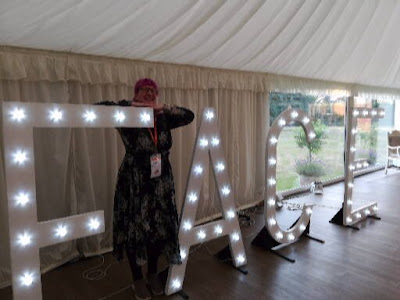
Taking the research on the road This has been an enlightening, sometimes humiliating and humbling experience. What with the tec, the flow and getting the preparation right. It has been a busy summer since teaching duties finished. Wheelie suitcase at the ready, USB stick in hand I marched forth to meet the tide of conference season. Weeks and weeks of finely honing my abstract and sending it out willy-nilly to all kinds of conferences and ‘call for abstracts’ call outs I was in a whirlwind of expectation and excitement. As the time grew closer the nerves built up. I stand in front of a class every day, standing up is what I do, and I really love teaching, formal lectures and passing on what I know. In addition to this standing up I also play in an Irish band and of course we are on stage front and centre standing up in front of crowds – entertaining. And one more I dance in an amateur dance troupe, Indian and Persian dancing. So I do a lot of being at the front, speaki...
Image
Education and Training Foundation (ETF) annual conference Mary Ward House London monday 2 July 2018 We were welcomed by Proff Maggie Gregson who opened the conference talking about expanding the horizons of FE research, added to by Dr Lawrence Nixon and the Education and Training Foundation who fund FE research at SUNCETT, ETF was introduced by Paul Kessell Holland and a talk from Dr Samantha Broadhead on her newly published book co authored with Proffessor Maggie Gregson, on teaching Access, Practical Wisdom and Democratic Education. https://www.amazon.co.uk/Practical-Wisdom-Democratic-Education-Non-traditional/dp/3319733109/ref=sr_1_1?s=books&ie=UTF8&qid=1530626474&sr=1-1&keywords=broadhead+and+gregson Later in the day was an address by the CEO of ETF, David Russell. Here is what he said. Our role as FE practitioners and researchers was to critique and extend current research and data in the sector often done by HE or ‘Big Data’ collectors. What w...
Image
The Tale of Laertes: Double Whammy. Laertes is in his late twenties when he enrols on the Access course. He had been allowed to leave school at fourteen for several reasons, he doesn’t read well, he did not enjoy the patriarchal system at school, got into trouble and became a school refuser. Finally the school let him leave, and he went to help in his Dad’s plastering business. Endeavouring to acclimatise and enculturate him into the college milieu is a difficult task as he is not used to how to behave in an educational setting, this may be down to the bad experience and memories of school. He is good naturedly disruptive and constantly coming across our administrators for not conforming to ‘normal’ student protocols like arriving on time, staying the whole day and handing work in on time. The tale of Laertes is that of a non-traditional route into FE, and is one we are familiar with on the Access course. The collaborative work we do with students talking through thei...
Image
Andy’s Story. Embodied Practice in the Pottery Workshop Bobs Village Gallery in Wisdom, North Carolingan   is a production pottery. It is a small factory making craft pottery by hand. A craft industry, in this case it is run by Bob and his wife Molly. Ellen Dean and a few other employees take care of the duties in the gallery and the pottery workshop. Bob and Ellen work together six days a week, eight hours a day. That is the kind of dedication a craft practice takes. He had a pottery wheel, a Shimpo and sits in the workshop window throwing pots. It is a practice, a labour and it is really hard, dirty, cramp-inducing work. Ellen puts handles on, fires up the bisque kiln, loads the glaze kiln, tends the gas kiln, glazes pots for orders and helps in the gallery packing pots to ship out to galleries. See post https://talkingaboutartmphil.blogspot.co.uk/2018/02/the-story-of-handle-man-why-practice.html for other stories about embodied practice. This summer they have an appre...